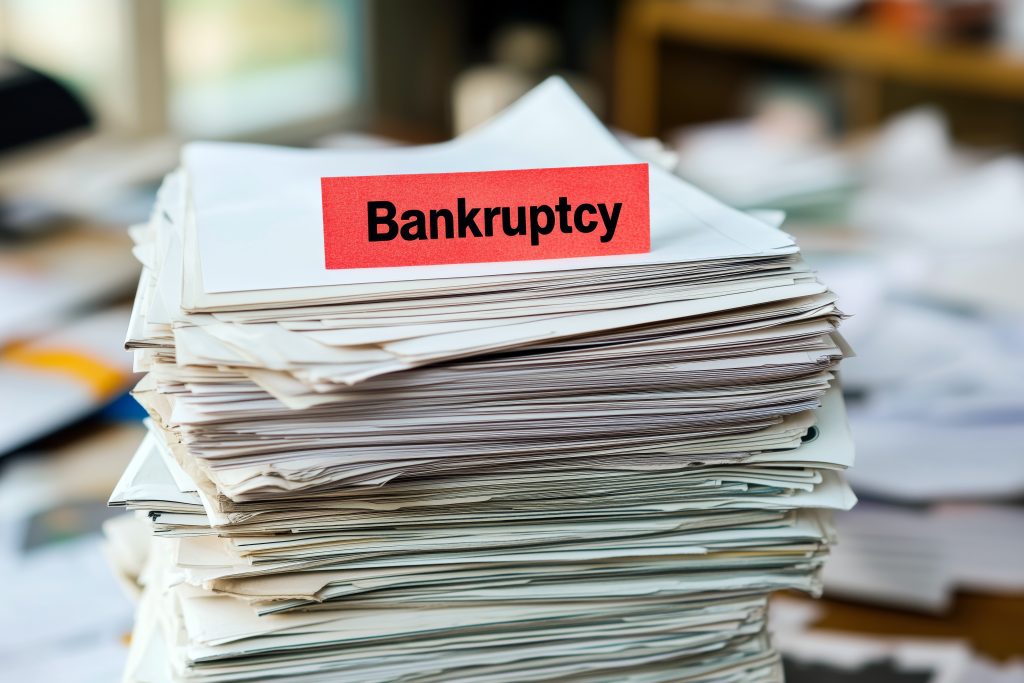
Payments have been late for three months, your counterparty’s manager isn’t picking up, and you receive a vague email about “temporary difficulties”. You run a check — and find out the LLC is already in a liquidation procedure. Or worse: in bankruptcy. The instinct is to call a lawyer in Belarus. The right instinct is to do it immediately, because at this point you’re counting in days.
This is not a theoretical overview. It’s a practical guide for creditors dealing with the liquidation or bankruptcy of a Belarusian counterparty who want to understand what can actually be done — and when.
How to Find Out About a Counterparty’s Liquidation or Bankruptcy in Belarus
Most creditors are the last to hear about their counterparty’s troubles. That’s not a coincidence — debtors benefit from buying time. But Belarusian law requires liquidation information to be published in official sources, and if you know where to look, you can find out what’s happening before anyone tells you officially.
Where to check
The Unified State Register (egr.gov.by). The official registry of legal entities in Belarus — egr.gov.by. Everything is recorded here: the liquidation decision, the appointment of a liquidator, changes in the company’s status. A check takes about a minute — just enter the company’s tax ID or name. If the status field says “liquidation”, start acting.
The Economic Court portal. Bankruptcy cases are handled by economic courts. Information on opened cases, appointed administrators, and court decisions is published publicly on court.gov.by. Search by company name or tax ID.
The newspaper Respublika and other official publications. Publication of a liquidation notice is a legal requirement. The creditor filing deadline runs from the date of that publication — not the date you personally received notice. Not when you heard about it unofficially. That distinction matters.
Written notice from the liquidator. In voluntary liquidation, the liquidator is required to notify known creditors directly. But “required” doesn’t mean “will do it on time”. The notice can arrive late — or not at all, especially if the counterparty has outdated contact information. Don’t wait for it.
Warning signs to watch for before any official announcement
In practice, a liquidation rarely comes out of nowhere. Months before it starts, there are usually signs you can catch if you’re paying attention: payments delayed with no explanation, refusal to meet contractual obligations, mass layoffs, a sudden change of director or registered address, silence in correspondence. Any of these is a reason to check the counterparty’s status in the Unified State Register immediately — don’t wait for something more dramatic.
What to Do Immediately After Receiving a Liquidation Notice
A liquidation notice is not a reason to panic, but it is a reason for immediate, specific action. Delays here literally cost money.
Step one: calculate the deadline
The filing deadline for creditor claims is generally two months from the date of the official liquidation publication. Not from when you personally received notice. Not from when you heard through the grapevine. Find the publication date in the official source and calculate your deadline right away. That’s the first thing to do.
Step two: gather your documents
While you’re working out the deadline, start pulling together everything that proves the debt. The contracts underlying the obligation. Acts of work performed, delivery notes, invoices. Correspondence in which the debtor acknowledged the debt. A breakdown of the amount owed: principal, interest, and any penalties. If the debt has already been awarded by a court — that judgment too. For foreign companies: any documents in a foreign language will need a notarised Russian translation. More on how we work with foreign creditors is on our debt collection for foreign companies page.
Step three: file your claim with the liquidator
The claim is submitted in writing. It must state the basis for the debt, the full amount broken down by component, and your details as a creditor. Attach copies of all supporting documents. Send it in a way that creates a record of dispatch and receipt: registered post with return receipt, or a courier with a signed acknowledgement.
If the liquidator refuses
File a claim with the economic court seeking recovery of the debt and an order to include your claim in the register. This right exists even if the payment deadline under your contract has not yet arrived. The counterparty’s liquidation is sufficient grounds for an early claim. For more on how creditor representation works in Belarusian courts, see our arbitration and dispute resolution page.
After you’re in the register
Getting into the register isn’t the finish line. Monitor the procedure: the liquidator is required to inform creditors when the interim and final liquidation balance sheets are drawn up. Staying involved at this stage lets you spot violations while there’s still something to be done about them.
Why Speed Matters
Of everything we see in practice, one mistake comes up more often than any other: the creditor waits. Waits for clarity. Waits for the official notice. Waits to see how things develop. That waiting is expensive — sometimes it costs the entire debt.
Three specific consequences of delay that we encounter regularly.
Losing your place in the register
Creditors who miss the filing deadline can still submit a claim — but their claims will be satisfied last, from whatever remains after everyone else has been paid out. In practice, that almost always means zero. Not “less” — zero.
Asset stripping becomes irreversible
Debtors often prepare for bankruptcy in advance: transferring property to affiliated parties, selling assets for a fraction of their value, paying off debts to “the right” creditors at the expense of everyone else. These transactions can be challenged — but only while the limitation period hasn’t expired and there’s someone in a position to pursue it. The later a creditor enters the process, the fewer options they have.
Subsidiary liability passes you by
Holding the director or participants personally liable for the LLC’s debts is a separate process with its own evidentiary requirements and procedural deadlines. A creditor who was slow to assert their claim risks missing that conversation entirely — the key decisions in the case will be made without them.
What to do before the formal procedure even starts
If a counterparty is behaving suspiciously but no procedure has been opened yet, that’s not a reason to relax. This is precisely the time to gather documents, assess the debtor’s assets, and consult a lawyer. A pre-emptive claim or interim protective measures can sometimes secure your position before things become obvious.
Gather and organise all documents relating to the debt
Identify debtor assets that could be subject to interim protective measures
Consult a lawyer about whether a pre-emptive claim makes sense
Check the counterparty’s status in the Unified State Register and on the economic court portal
When Can You Challenge a Debtor’s Pre-Bankruptcy Transactions
One of the most common scenarios: a few months before bankruptcy, the debtor “happens” to sell a warehouse to an affiliated company for a third of its market value, writes off a debt owed to the right party, or transfers equipment to the director’s relative. By the time insolvency proceedings open, the assets are gone. Sound familiar?
Belarusian law allows these transactions to be challenged. They’re called suspicious transactions — and where there are grounds, a court can declare them void and return the assets to the insolvency estate.
Which transactions can be challenged
First: gratuitous transactions — gifts, debt write-offs without any consideration, transfers of assets to a trusted party without payment. Next: sales at a clearly undervalued price — a deviation of 20 to 30 percent or more from market value is enough to raise a challenge. A separate category is preferential repayment: the debtor paid off an affiliated lender while other creditors were left waiting. And finally, pledges or guarantees granted in favour of connected parties shortly before bankruptcy.
Who can bring the challenge
The insolvency administrator has the right — and the direct obligation — to challenge suspicious transactions. If the administrator is inactive, a creditor can act independently: take the matter to court or demand that the administrator act, and if they refuse, challenge that refusal. This isn’t theoretical — it’s a working legal tool. For more on how we protect business interests through the courts, see our corporate law page.
Where Else to Look for Recovery
Say the insolvency estate has been distributed and your debt has been only partially paid — or not paid at all. Many creditors stop here. They shouldn’t. Belarusian law provides several mechanisms that allow you to go further, beyond the debtor’s own assets.
Subsidiary liability
This is the most powerful tool that gets used least often — usually because creditors don’t know it exists. If the bankruptcy resulted from specific actions or inaction by the LLC’s director or participants, they can be held personally liable for the company’s debts. The grounds vary: driving the company into bankruptcy through bad-faith decisions, failing to file for bankruptcy when required, fraudulent bankruptcy. You need to establish causation — it requires work with documents and evidence — but it’s a realistic path when the facts support it. More on our debt recovery practice is on our debt collection in Belarus page.
Liquidator liability
If the company went through voluntary liquidation and the liquidator violated the required procedure — failed to notify creditors, improperly distributed assets, or didn’t file for bankruptcy when the assets proved insufficient — they bear subsidiary liability jointly and severally with the participants. This is set out directly in Presidential Decree No. 1 of 16 January 2009.
Challenging transactions
If assets were transferred out before the bankruptcy — see section 4 above. Returning property to the insolvency estate directly increases the pot available for distribution among creditors. Sometimes that changes the picture completely.
Secured creditor claims
If your debt was originally secured by a pledge over the debtor’s assets, you have a preferential right to be satisfied from the proceeds of selling that pledged property — outside the general queue. That’s not a guarantee of full recovery, but it’s a materially better position than being an unsecured third-tier creditor.
Legal Opinion in Belarus
Obtain a legal opinion in Belarus considering international standards and local regulations!
One of the first questions clients ask: how long will this go on? The honest answer is: it depends. But there are reference points that help with planning.
Liquidation
Voluntary liquidation with sufficient assets and no serious disputes can be wrapped up in three to six months. If there are creditor disagreements, court proceedings, or assets that need to be sold, that stretches to a year or more. Compulsory court-ordered liquidation typically takes six to twelve months. If it turns out during liquidation that assets are insufficient to cover everyone, the process converts to bankruptcy — and the timelines become quite different.
Bankruptcy
There are two key stages. The protection period — usually up to three months: the court assesses whether the debtor’s solvency can be restored. Then insolvency proceedings — the main and longest phase: six to twelve months in straightforward cases, eighteen months or more where there are disputes and complex assets. The court can extend the period multiple times.
Reference timeline
Stage
Liquidation
Bankruptcy
Filing deadline for creditors
2 months from publication
During the protection period / insolvency proceedings
Protection period
—
Up to 3 months
Insolvency proceedings
—
6–18 months (extendable)
Voluntary liquidation
2–6 months if assets are sufficient
—
Compulsory liquidation
6–12 months
—
Typical range
3–12 months
9–24+ months
What this means for you in practice
If a procedure could run for two years, a reasonable question arises: is it worth actively chasing the insolvency estate, or better to focus energy on subsidiary liability? Should you reserve the loss in your accounts now? How do you manage a long-running strategy? There’s no universal answer — it depends on the specific case, the composition of assets, and the positions of the other creditors.
The Bottom Line
A counterparty’s bankruptcy or liquidation is not a write-off. Creditors who know the process and act within the right windows recover money — fully or partially. Those who wait, as a rule, recover nothing.
We at AMBY Legal have been working with foreign creditors in Belarusian bankruptcy and liquidation cases since 2015. We know how to structure a creditor claim, how to challenge suspicious transactions, and when it makes sense to pursue subsidiary liability. If you have a specific situation, let’s talk it through.
About the Author
AMBY Legal Team
AMBY Legal is a team of licensed advocates based in Minsk, Belarus, advising foreign businesses and private clients since 2015.
Opening Bank Accounts
Professional assistance in opening bank accounts in Belarus for companies and private clients!
In the modern world, information technology plays a vital role in the development of the economy. It allows you to create new products and services, increase production efficiency, and improve the quality of people’s lives. In this regard, special legal regimes are being made in many countries where resident companies developing and implementing information technologies […]
Registration of an open joint stock company (JSC) in Belarus is an important stage for entrepreneurs seeking to develop their businesses and attract investments. This process requires a careful approach to legislative requirements and procedures since properly conducted state registration contributes not only to the legitimacy of the business but also to the creation of […]
The merger of companies is a strategic tool for business development that allows you to combine resources, strengthen market positions, optimize management and increase competitiveness. For owners and top managers, this solution often becomes a logical stage of growth, especially in the context of business expansion, entering new markets or the need to consolidate assets. […]