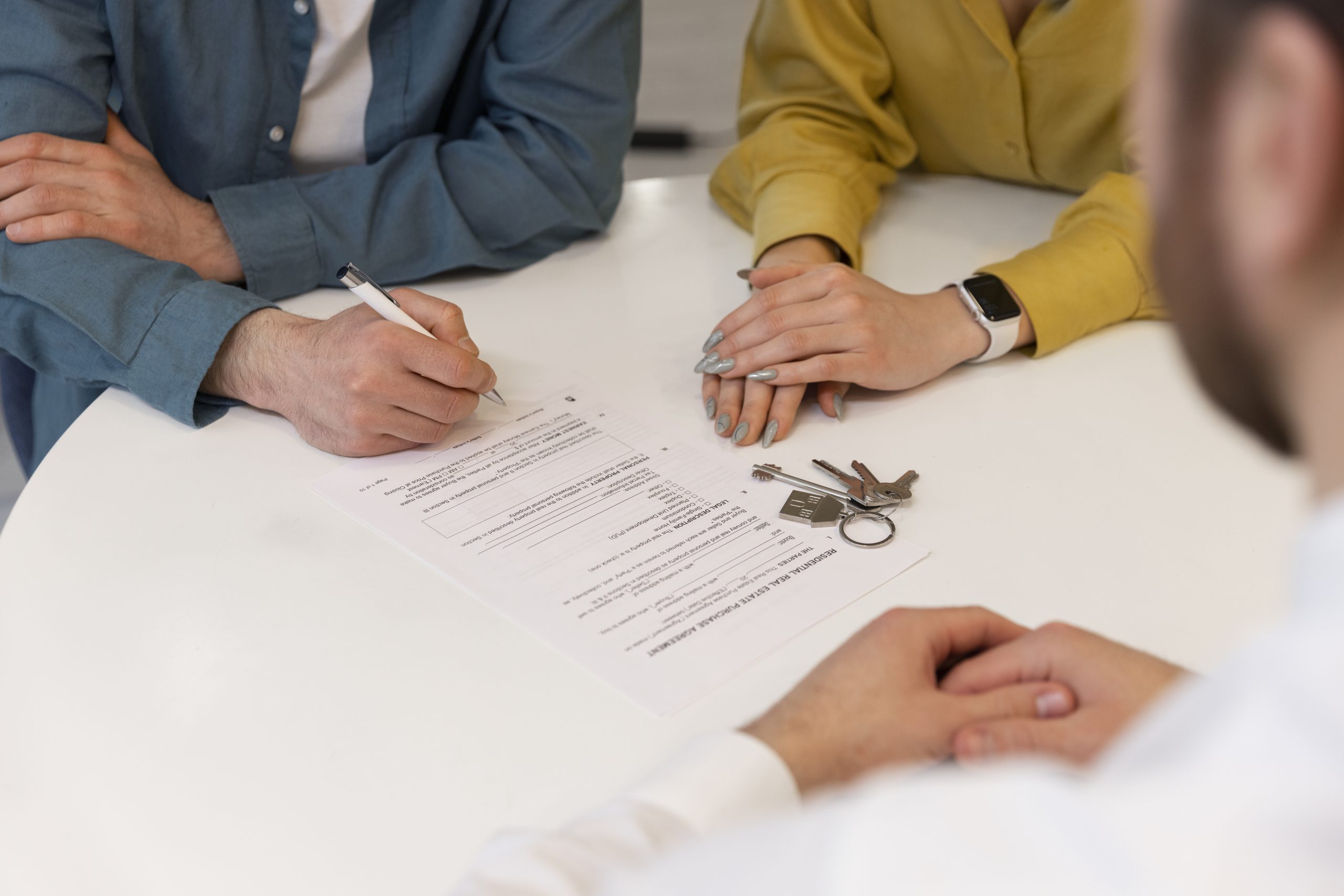
A foreigner with property in Belarus — a Minsk flat, a stake in a company, a bank account — usually assumes one of two things: that the will they already have at home covers it, or that they can simply write down their wishes, sign them and be done. In Belarus, neither holds.
A Belarusian will must be made in notarial form. A will drawn up without a notary, however clearly it sets out your wishes, is not valid, and a court will not recognise it. And Belarusian real estate is governed by Belarusian succession law, whatever your nationality and wherever any other will was made. So your foreign will offers no straightforward route to your Minsk flat, and it runs up against mandatory Belarusian rules such as the obligatory share, which guarantees certain heirs a minimum whatever the will says. For a foreigner with Belarusian assets, the safe course is usually a separate, properly notarised Belarusian will covering those assets. This article covers the form such a will must take, the assets it should cover, the obligatory share and the most common mistakes.
The form: it must be notarial
Start with the hurdle most homemade wills fail. A Belarusian will is valid only in written notarial form — drawn up and certified by a notary. A will you write and sign at home, without a notary, has no legal force, and a court will not uphold it, however clear your intentions. Two variations are worth knowing. A closed will keeps its contents private: you hand the sealed will to the notary in the presence of two witnesses, and the notary accepts it without reading it. And in special circumstances, the law treats certification by certain officials as equivalent to a notary’s: a hospital’s chief doctor for a patient, the captain of a ship sailing under the Belarusian flag, the head of an expedition. For almost everyone, though, the rule is simple: no notary, no valid will.
Which assets, and which law governs them
Now for why a foreigner needs a Belarusian will at all. Belarusian real estate is governed by Belarusian succession law, because immovable property follows the law of the place where it is located — whatever your nationality or place of residence. Movable property, such as bank accounts and personal belongings, is generally governed by the law of your last place of residence. A stake in a Belarusian company also brings the company’s own rules on admitting heirs into play. In practice, then, a foreigner with Belarusian assets — above all real estate — usually needs a Belarusian will for them, because a foreign will is an awkward fit. Your home-country will still disposes of your assets at home; your Belarusian will deals with those in Belarus. The table below shows which law applies to what.
The obligatory share: the limit on any will
Whatever your will says, one rule takes precedence. Certain heirs — minor children, and children, a spouse, parents or dependants who are unable to work — are entitled to an obligatory share regardless of the will: at least half of what they would have received if there were no will at all. (“Unable to work” is a legal status in Belarus: besides minors, it covers anyone who has reached pensionable age or has a disability of any group.) The rule applies regardless of nationality, so heirs who are foreign nationals are protected too. The bottom line: a Belarusian will cannot fully disinherit these heirs, and a will drafted without regard to it will simply run into the obligatory share when the estate is settled. Plan for it and build it into the will, rather than leave your beneficiaries to deal with the shortfall after your death.
A worked example: the foreigner with a Minsk flat
Put these rules together and you get the case we see most often. A foreign national owns a flat in Minsk and has a will made at home leaving everything to his partner. He assumes it covers the flat. Not straightforwardly. On his death, the flat — Belarusian real estate — is governed by Belarusian succession law. His home-country will has to be recognised as to form, translated and legalised, and then reconciled with Belarusian rules, including the obligatory share, which may entitle his disabled adult child to part of the flat whatever the will says. His partner faces months of cross-border administration over a single flat. Had he made a short Belarusian will covering the Minsk flat — in notarial form and drafted with the obligatory share in mind — the flat would have passed under a document that Belarusian notaries and courts work with directly, and his home-country will would have dealt with everything else. Same wishes, far less friction: the difference was one local will.
Making the will: who, how and where
A few practical points. A will must be made in person by someone with full legal capacity — an adult whose capacity has not been limited by a court — and a foreigner can make a Belarusian will on the same terms as a citizen. It should be in a language the testator understands, with a translation arranged where needed. A later will revokes an earlier one, so your wills in different countries need to be kept consistent. You can appoint an executor. And although a will is a personal act performed before a notary, in limited circumstances the notary can come to the testator rather than the other way round. None of this is onerous; the point is that it is a proper notarial act, done correctly — not a template you fill in and file away.
What to put in the will, and the documents you’ll need
A Belarusian will does not need to be long, but it does need to be clear and complete. It should identify you, name your beneficiaries and their shares, and describe what you are leaving — either specific assets or, commonly, “all my property in Belarus”. It is worth naming a substitute heir in case a beneficiary dies before you, and you can appoint an executor. For the notary appointment, expect to bring your identity document, the title documents for the assets you are leaving (the ownership documents for a flat, for instance) and details of your intended heirs. Foreign documents may need translating, and the will itself must be in a language you understand. None of this is burdensome — but a will that is vague about the assets or the shares creates exactly the kind of ambiguity that leads to disputes. The clearer the will, the fewer questions your heirs will face.
Coordinating two wills: Belarusian and home-country
If you make a Belarusian will for your Belarusian assets and keep a separate will at home for everything else, the two must be coordinated, because a later will can revoke an earlier one. The safest approach is to confine each will to its own territory: the Belarusian will deals only with your Belarusian assets and says so expressly, and the home-country will covers everything else without reaching into Belarus. Get this wrong — sign a new “last will, revoking all previous wills” in either country — and you can accidentally cancel the other one, leaving a set of assets under a will that was never meant to cover them. The two wills should therefore be drafted with each other in mind, ideally with advisers in both countries talking to one another. Two coordinated wills are a clean and common structure; two wills that ignore each other are a trap.
Foreign wills and Belarusian assets
This is where foreigners most often run into difficulty. A will validly made abroad may be recognised in Belarus as to form — but Belarusian real estate remains subject to substantive Belarusian rules, including the obligatory share. Administering a foreign will over Belarusian assets means translation, legalisation and possible conflict between what the will says and what Belarusian law requires. So even a perfectly valid foreign will is often the slower and harder route for Belarusian property. That is the case for a separate Belarusian will covering those assets: it is made in the right form, under the right law and within the mandatory rules, and it spares your heirs the cross-border administration that relying on a foreign will alone would force on them.
Inheritance Law
Receive professional legal assistance for inheritance matters in Belarus!
The same mistakes come up again and again, and each defeats the purpose of making a will. Writing a homemade, unnotarised will and assuming it is valid — it is not. Relying on a single home-country will to cover Belarusian real estate — it is a poor fit. Drafting as if the obligatory share did not exist — it does, and it overrides the will. Assuming one country’s law governs everything, when immovable and movable property may be split between Belarusian law and the law of your home country. And never updating the will after a marriage, divorce, the birth of a child or a property purchase — an out-of-date will can go badly wrong. There is a useful flip side: many of the grounds on which wills are later challenged are exactly these mistakes, so a well-made will is also your best protection against a challenge.
Keeping it valid: capacity, revocation, and where it’s kept
A few steps keep a will valid and easy to find. It must be made while you have full legal capacity — a notary will not certify a will for someone whose capacity a court has limited — so make it while there is no doubt, not once capacity is in question. You can change or revoke it: a later will supersedes an earlier one to the extent that they conflict, or you can revoke a will outright, so keep it up to date after a marriage, divorce, the birth of a child or a property purchase. And it is on record: a notarial will is registered, so after your death a notary can establish that it exists and where it is kept. That is why a properly made will is not only valid but actually found and acted on. An unregistered note in a drawer is neither: it may never be found, and even if it is, the law will not treat it as a will. Treat your will as something to do well once and revisit as your life changes — not as a one-off task to tick off and forget.
Which law governs your assets
Where a Belarusian will matters — and where your home-country will still applies.
The asset
Which law governs
A Belarusian will?
Belarusian real estate (a flat, a building)
Belarusian law — the law of the place where the property is located
Yes — this is where a Belarusian will matters most
A stake in a Belarusian company
The company’s own rules on admitting heirs also apply
Usually — worth including
Movable property, bank accounts
Usually the law of your last place of residence
It depends — may be governed by your home country’s law
Assets outside Belarus
The relevant foreign law
No — covered by your home-country will
General guide only; the governing law depends on the asset and the countries involved, so check how it applies to your estate.
Frequently Asked Questions
Can a foreigner make a will in Belarus?
Yes. A foreigner with full legal capacity can make a Belarusian will on the same terms as a citizen. For a foreigner with Belarusian assets — especially real estate — it is usually the sensible choice, because a foreign will is a poor fit for Belarusian property.
Does my will have to be notarised?
Yes. A Belarusian will is valid only in notarial form — certified by a notary. An informal will written at home without a notary has no legal force, and a court will not uphold it. A closed will (one the notary accepts without reading) is an option, but it is still a notarial act.
Will my foreign will cover my Belarusian flat?
Not straightforwardly. Belarusian real estate is governed by Belarusian succession law regardless of your nationality or where the will was made, and mandatory Belarusian rules, such as the obligatory share, apply. A foreign will may be recognised as to form, but administering it over Belarusian property is slower and may conflict with Belarusian law. That is why a separate Belarusian will is usually the better option for Belarusian assets.
Can I disinherit my spouse or children?
Not entirely, if they are protected heirs. Minor children, and children, a spouse, parents or dependants who are unable to work, are entitled to an obligatory share — at least half of their intestate share — whatever the will says and whatever their nationality. You can leave the rest as you wish, but no drafting can remove the obligatory share.
What is the obligatory share?
A guaranteed minimum for certain heirs — minor children, and children, a spouse, parents or dependants who are unable to work (including anyone of pensionable age or with a disability) — of at least half of what they would receive if there were no will. It overrides the will, so it has to be planned for rather than ignored.
Do I need a separate Belarusian will?
If you have assets in Belarus, usually yes. A Belarusian will in the correct form, under Belarusian law and covering your Belarusian assets, is simpler and faster for your heirs than relying on a foreign will that has to be recognised, translated and reconciled with Belarusian rules. Keep it consistent with your home-country will so that the two do not conflict.
Can I make it without coming to Belarus?
A will is a personal notarial act, so it is made before a notary; in limited circumstances the notary can come to the testator. The cross-border planning around it — coordinating your Belarusian and home-country wills — can be handled by advisers in both countries. Talk your situation through with a lawyer before assuming either that you must travel or that you need not.
What happens if I die without a valid will in Belarus?
Your Belarusian assets pass under the rules of intestate succession — to your heirs in the order set by law, not necessarily as you would have wished — and your heirs may then need to be recognised as heirs by a court. For a foreigner, that can mean an outcome, and an administration process, quite different from what a proper will would have produced. If you have assets in Belarus and clear wishes for them, a valid Belarusian will is how you secure those wishes.
What should the will actually say?
It should identify you, name your beneficiaries and their shares, and describe what you are leaving — specific assets or, commonly, “all my property in Belarus”. It is sensible to name a substitute heir in case a beneficiary dies before you and, if you wish, to appoint an executor. Vagueness about the assets or the shares is what breeds disputes, so clarity is everything.
What documents do I need to make the will?
Your identity document, the title documents for the assets you are leaving (the ownership documents for a flat, for example) and details of your intended heirs. Foreign documents may need translating, and the will must be in a language you understand. The notary works from these documents, so bring them to the appointment.
Can I have both a Belarusian will and a home-country one?
Yes. For a foreigner with assets in two countries, this is often the cleanest structure: a Belarusian will for the Belarusian assets and a home-country will for everything else. The key is to coordinate them so that neither accidentally revokes the other; each should be limited to its own assets and drafted with the other in mind.
How do I change or revoke my will?
Either make a new will, which supersedes the earlier one to the extent that they conflict, or revoke the old will outright — both through a notary. Keep your will up to date after major life events (marriage, divorce, the birth of a child, a property purchase), and make sure that a change to your will in one country does not unintentionally cancel the other.
Conclusion
For a foreigner with Belarusian assets, a valid will is a question of form, governing law and the obligatory share — not just of wishes. A Belarusian will must be notarial; Belarusian real estate is governed by Belarusian law whatever your home-country will says; and certain heirs are protected no matter what. Make a proper Belarusian will for your Belarusian assets, drafted within those rules and consistent with your wider estate planning, and your wishes will take effect. Rely on an informal note or a foreign will alone, and they may not.
If you own property in Belarus and want it to pass as you intend, tell us what you own here and how it fits into your wider estate. We will draft your Belarusian will and arrange its notarisation so that it works: in the right form, under the right law and within the mandatory rules. Get in touch and we will take it from there.
Автор
Команда AMBY Legal
AMBY Legal — это команда лицензированных адвокатов из Минска, оказывающая юридическую поддержку иностранному бизнесу и частным клиентам с 2015 года.
Семейное право
Получите экспертную юридическую помощь в семейных делах в Беларуси с надежной защитой ваших прав и интересов!
Получайте актуальные юридические новости, полезные материалы и тенденции рынка.
Мы в социальных сетях
Подписывайтесь на нас, чтобы быть в курсе изменений и получать практические рекомендации в сфере права и бизнеса.
Связаться с нами
Связаться с нами, чтобы получить информацию о проекте
We use cookies
We use cookies to give you the most relevant experience, remember your preferences, and understand how our site is used. You can accept all cookies, reject non-essential ones, or manage your choices in detail. Read our Privacy Policy and Cookie Policy.
Cookie settings
You can change your preferences at any time. Your choices are stored for 12 months on this device.
Strictly necessary
Always on
On
Essential for core site functionality: authentication, security, load balancing, and remembering your consent. The site cannot work without these cookies.
Cookie name
Provider
Duration
Purpose
cookie_consent
Amby Legal
12 months
Stores your cookie consent preferences.
Functional
Remember your choices such as language, theme, saved form data, and video or audio preferences for a more convenient experience.
Cookie name
Provider
Duration
Purpose
locale
Amby Legal
12 months
Remembers your preferred language.
remember_me
Amby Legal
30 days
Keeps you signed in on trusted devices when you choose to.
Analytics
Help us understand how visitors use the site so we can improve content, navigation, and performance. Includes tools such as Google Analytics, Yandex.Metrica, Hotjar, and Plausible.
Cookie name
Provider
Duration
Purpose
_ga
Google Analytics
2 years
Distinguishes unique users and sessions for usage statistics.
_gid
Google Analytics
24 hours
Distinguishes users within a 24-hour period.
_ym_uid
Yandex.Metrica
1 year
Identifies returning visitors for analytics reports.
_ym_d
Yandex.Metrica
1 year
Stores the date of the user's first site visit.
plausible_ignore
Plausible
Session
Honours opt-out from Plausible analytics when set.