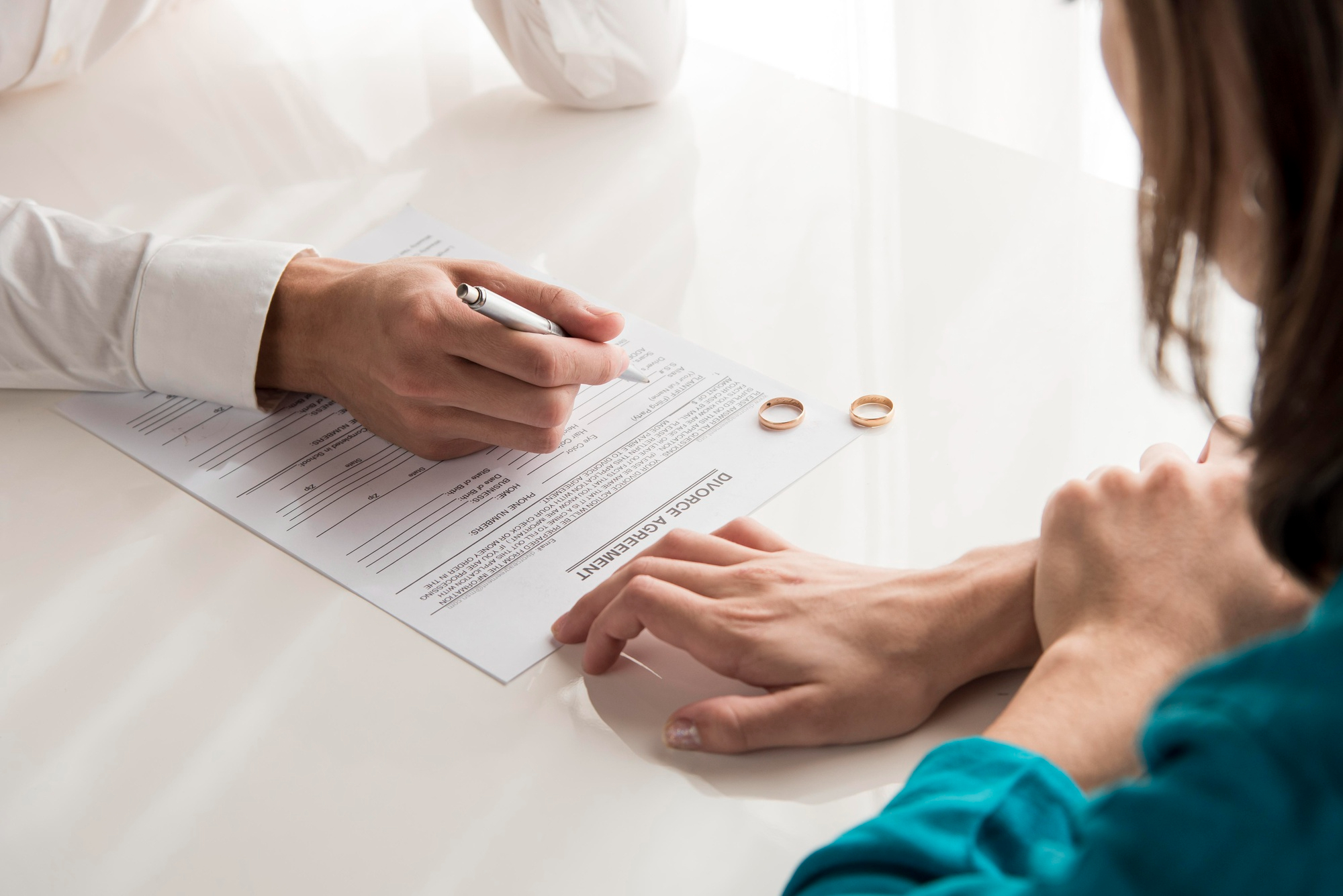
Ending a marriage is rarely a simple decision, and in Belarus it is also a formal legal act with strict procedural rules. Whether you are a Belarusian citizen living in Minsk, an expatriate whose marriage was registered years ago, or a foreign national married to a Belarusian, the process runs through the same two channels: the civil registry office or the court. Choosing the correct route from the start saves months of delay and, in many cases, significant expense.
This guide walks through the divorce procedure in Belarus as it stands in 2026, following the amendments to the Marriage and Family Code that took effect in 2025 and 2026. It explains which route applies to your situation, what documents to prepare, how long each stage takes, and what to expect on property, alimony and custody.
The Legal Framework
Divorce in Belarus is governed by the Code of the Republic of Belarus on Marriage and Family, No. 278-Z of 9 July 1999, as amended. The Code sets out two mechanisms for dissolving a marriage during the lifetime of the spouses: an administrative procedure through the registry office under Article 35¹, and a judicial procedure through the court under Articles 36–37.
The rest — property division, spousal maintenance, the place of residence of children and the amount of child support — is either agreed by the spouses in writing or decided by the court at the same hearing. Religious ceremonies have no legal effect: Article 4 of the Code recognises only marriages registered in the civil registry, and only those marriages need to be formally dissolved.
Two Routes to Divorce
The first question every client asks is: registry office or court? The answer depends on three factors, taken together:
Do both spouses agree to the divorce?
Do they have common minor children (under 18)?
Is there a dispute over jointly acquired property?
If the answer to all three is “yes to divorce, no minor children, no property dispute”, the registry office route is available. In every other case — one spouse objects, there is a child under 18, or the parties cannot agree on who takes the flat — the divorce must go through court.
There is also a narrow set of situations under Article 37 in which the court dissolves the marriage without any reconciliation period at all. These are covered further below.
Step 1: Confirm the Procedure
Before filing anything, verify which route your case falls into. A common mistake is filing a joint application at the registry office and only later realising that a jointly bought car counts as a “property dispute” — the application will be refused, and the couple will lose the fee and several weeks.
One more thing worth flagging: Article 35. A husband can’t file for divorce while his wife is pregnant, or at any point before their shared child turns three — not unless she gives written consent. The idea behind the rule is straightforward. Whoever is doing the heavy lifting of caring for a very young child shouldn’t have divorce proceedings dropped on them on top of everything else. Note that the restriction only applies to divorces initiated by the husband. If the wife wants to file, she can.
Step 2: Divorce through the Registry Office
If both spouses meet the three conditions above, they submit a joint application to the registry office at their place of residence. The registry office is required to explain the conditions of administrative divorce and to inform the couple of their right to attend an informational meeting with a mediator.
The waiting period is set by Article 35¹: not less than one month and not more than two months from the date of the joint application. On the appointed date both spouses must appear in person to register the divorce. If either changes their mind or fails to appear, the registration does not take place and the couple must start over — through the court, if the disagreement persists.
The marriage is considered terminated from the day the divorce is registered, not from the day of the initial application. Each spouse receives a divorce certificate, and Article 43 allows the spouse who changed surname on marriage to keep it or return to the pre-marital surname.
Step 3: Divorce through Court
The judicial procedure applies in the far more common scenario of at least one minor child, a property dispute, or objection by one spouse. The claim is filed at the district court of the defendant’s place of residence.
Under Article 36 the court, on accepting the claim, grants a three-month period for reconciliation and for the spouses to reach agreement on the children and property. The court also explains the option of resolving the dispute with a mediator. After three months, if the court finds that continued family life is impossible, the marriage is dissolved. In more difficult cases the court may extend the reconciliation period by up to six additional months.
At the hearing the court decides not only the fact of divorce but also — under Article 39 — with which parent the children will live, the contact arrangements for the other parent, the amount of child support, spousal maintenance where claimed, and the division of joint property, unless these questions have already been resolved by a marriage contract, an Agreement on Children, or an Alimony Agreement.
The divorce takes effect from the day the court judgment enters into legal force. A copy of the judgment is sent by the court to the registry office within ten days, and the spouses obtain divorce certificates there. If the deadlines matter for a subsequent marriage or property transaction, you can verify current court practice through the Supreme Court of Belarus.
When the Reconciliation Period does not Apply
Article 37 sets out three situations where the court dissolves the marriage without granting time for reconciliation:
The other spouse has been declared missing by a court;
The other spouse has been declared legally incapacitated;
The other spouse has been convicted of a crime and sentenced to at least three years’ imprisonment.
These cases move considerably faster — typically one to two months — but require documentary proof of the underlying court decision or sentence. The related scenario of an uncooperative or vanished spouse is covered in more detail in our note on divorce when a spouse won’t cooperate.
Step 4: Dividing joint Property
Article 23 establishes that property acquired by spouses during marriage is their joint common property, regardless of whose name is on the title or who paid. On divorce, Article 24 presumes equal shares, but the court can depart from equality to protect the interests of minor children or a spouse who was primarily raising them, and can also increase one spouse’s share where the other wasted family assets or refused to work.
Personal property — items owned before the marriage, inheritances and gifts received during marriage, and personal-use items other than luxury goods — remains the separate property of each spouse under Article 26.
Spouses can divide property either during marriage or after divorce by a written Agreement on the Division of Joint Property, which requires notarisation. A three-year limitation period applies from the moment a former spouse becomes aware of a violation of their property rights. Where the parties signed a marriage contract before or during the marriage, the court applies its terms; a properly drafted contract can substantially simplify the divorce.
Family Law
Get expert legal assistance in family matters in Belarus with reliable protection of your rights and interests!
For couples with minor children, the practical stakes of divorce lie in three questions: residence, contact and money. Article 74 provides that in the event of parental separation the residence of the child is determined by mutual agreement, and only where the parents disagree does the court decide, taking into account the age of the child, attachment to each parent, the parents’ personal qualities, material conditions and — for children aged ten and older — the child’s own opinion.
Parents can regulate these matters privately through an Agreement on Children under Article 76¹, which must be in writing and notarised. It can cover residence, contact schedule, child support amounts, and even foreign travel arrangements. When the court decides instead, child support for minors is calculated under Article 92: 25% of the paying parent’s income for one child, 33% for two, and 50% for three or more, with adjustments where warranted. Detailed considerations on where the child will live and how contact is structured are set out in a separate note on the child’s place of residence after divorce.
Spousal maintenance is possible but far more limited. Article 29 gives a right to support to a pregnant wife, a spouse caring for a child under three or a disabled child, and an incapacitated spouse in need — and Article 30 preserves that right for a defined period after divorce in similar circumstances.
Foreign Spouses and Cross-Border Divorces
Cases involving a foreign spouse follow the same Code but add a layer of documentation: apostilled marriage certificates, notarised translations of foreign passports, and — where the divorce will be recognised abroad — apostilled copies of the Belarusian judgment. Article 231 of the Code governs the recognition of divorces registered outside Belarus.
If either party lives outside Belarus, the case can still proceed through Belarusian courts, often via a notarised power of attorney authorising a Belarusian advocate to appear in person. If you or your spouse are outside Belarus and the marriage was registered in Belarus, the practical mechanics of a distance divorce are handled routinely by qualified counsel — see our dedicated service page on divorce with a Belarusian citizen for how the paperwork is structured.
For international documents that will be produced in Belarus, apostille and legalisation requirements are administered by the Ministry of Foreign Affairs of Belarus.
Frequently asked questions
How much does divorce cost in Belarus in 2026?
Depends on two things: your state duty and your lawyer. The duty itself changes based on whether you’ve been divorced before — a second divorce isn’t priced like a first one. Legal fees are harder to pin down. A straightforward mutual-consent case is cheap by comparison. Add a child, add a flat, add a spouse who’s fighting you, and the number climbs fast — often several times higher. Whichever advocate you talk to, get the fee in writing before you sign the engagement letter. That’s non-negotiable.
Can I divorce while my spouse is abroad?
Yes. The court can proceed even if the defendant lives outside Belarus, provided service of process is properly effected. In many cases both spouses can act through representatives holding notarised powers of attorney.
How long does an uncontested divorce with children take?
As a rule, at least three months from filing — this is the statutory reconciliation period. Where the parties have already agreed on residence, contact, support and property, the actual hearing after the three months is usually short.
Do I need a lawyer if we both agree?
Honestly, no — not always. If you’re going through the registry office, there are no kids in the picture, and there’s nothing to split, most couples handle it themselves without a hitch. Where it gets trickier is when children or property are on the table. Even if you agree on everything today, that Agreement on Children (or the property one) needs to be written in a way that actually holds up if things go sideways later. That’s where having a lawyer draft it — or at least look it over — pays for itself.
Will the court refuse a divorce?
The court cannot refuse to dissolve a marriage indefinitely if one spouse insists that the marriage has failed. It can, however, extend the reconciliation period up to six months in total.
Conclusion
Divorce in Belarus, 2026 edition: on paper, it’s straightforward. In practice, the details are what determine whether you’re done in a month or still fighting a year from now. If both of you agree and there’s nothing complicated on the table, the registry office handles it fast. If there’s a dispute — over a child, over money, over the apartment — you’re going to court, and you might as well use that trip to resolve everything at once, because the court can. Here’s the honest bit though. What decides your case isn’t how hard you push during proceedings. It’s what you did in the weeks before you filed. Which papers you brought. What you agreed to sign, and what you refused. Which strategy you locked in early. Get those things right and even a messy divorce lands somewhere reasonable. Get them wrong and even a simple one drags. If you’re anywhere outside the cleanest mutual-consent scenario, don’t do this alone — talk to a divorce lawyer in Belarus before you file anything.
About the Author
AMBY Legal Team
AMBY Legal is a team of licensed advocates based in Minsk, Belarus, advising foreign businesses and private clients since 2015.
Divorce with a Belarusian Citizen
Professional legal support for divorce with a Belarusian citizen, with full assistance at every stage!
Subscribe for useful materials, key legal updates, and industry trends.
Us on Social Networks
Join us on social media for the latest trends and practical guidance in law and business.
Contact us
Contact us to get information about the project
We use cookies
We use cookies to give you the most relevant experience, remember your preferences, and understand how our site is used. You can accept all cookies, reject non-essential ones, or manage your choices in detail. Read our Privacy Policy and Cookie Policy.
Cookie settings
You can change your preferences at any time. Your choices are stored for 12 months on this device.
Strictly necessary
Always on
On
Essential for core site functionality: authentication, security, load balancing, and remembering your consent. The site cannot work without these cookies.
Cookie name
Provider
Duration
Purpose
cookie_consent
Amby Legal
12 months
Stores your cookie consent preferences.
Functional
Remember your choices such as language, theme, saved form data, and video or audio preferences for a more convenient experience.
Cookie name
Provider
Duration
Purpose
locale
Amby Legal
12 months
Remembers your preferred language.
remember_me
Amby Legal
30 days
Keeps you signed in on trusted devices when you choose to.
Analytics
Help us understand how visitors use the site so we can improve content, navigation, and performance. Includes tools such as Google Analytics, Yandex.Metrica, Hotjar, and Plausible.
Cookie name
Provider
Duration
Purpose
_ga
Google Analytics
2 years
Distinguishes unique users and sessions for usage statistics.
_gid
Google Analytics
24 hours
Distinguishes users within a 24-hour period.
_ym_uid
Yandex.Metrica
1 year
Identifies returning visitors for analytics reports.
_ym_d
Yandex.Metrica
1 year
Stores the date of the user's first site visit.
plausible_ignore
Plausible
Session
Honours opt-out from Plausible analytics when set.